Axolotl Tank Setup
Properly setting up your tank is the first and most important step in ensuring your axolotl lives a long, healthy life. This guide is designed for beginners to help you create a thriving, stress-free home for your new aquatic friend.

Essential Tank Equipment

Tank Size Options
Minimum 20 gallons long for one adult, though 40 gallons is ideal for floor space.

Digital Thermometer
Essential for monitoring temperature daily. Accuracy is key for cold-water species.

Filter Type
Sponge filters or low-flow canisters are best to avoid stressing axolotls with current.

Water Test Kit
Liquid test kits are more accurate than strips for checking Ammonia, Nitrite, and Nitrate.

Cooling Options
A chiller is best, but clip-on fans can help keep water safely between 16–18°C.

Hides & Caves
Provide at least two smooth hides where your axolotl can escape bright lights.
Ideal Water Parameters
pH Level
7.4 – 7.6
Ammonia (NH3)
0 ppm
Nitrate (NO3)
5 – 20 ppm
Temperature
16°C – 18°C (60°F – 64°F)
Nitrite (NO2)
0 ppm
Water Conditioner
Dechlorinator (No Aloe Vera)
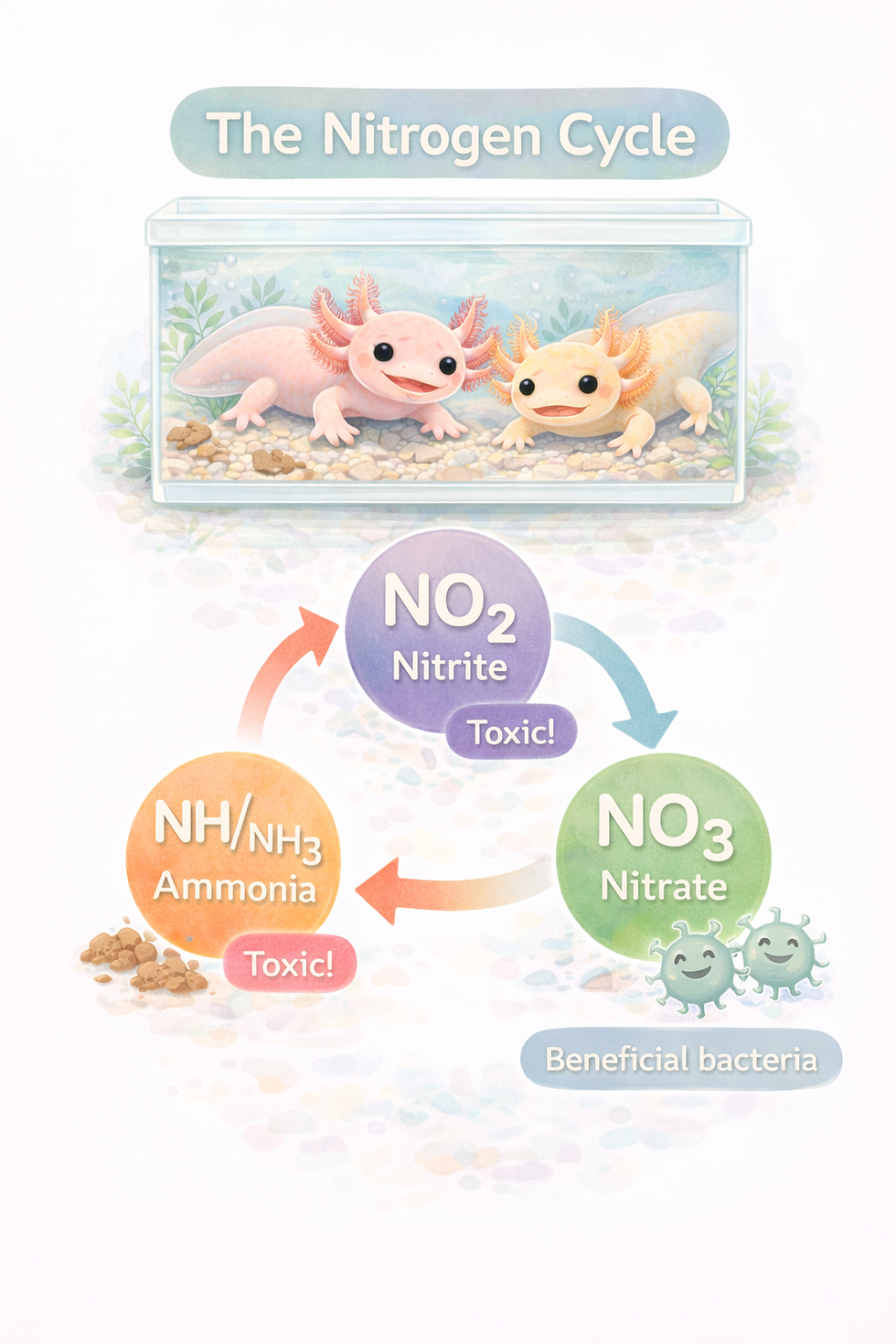
Cycling Your Tank: The Friendly Science Part
01
Starting the Cycle
Add an ammonia source like fish food or pure ammonia. This 'feeds' the first batch of beneficial bacteria.
02
The Ammonia Spike
As ammonia rises, nitrites will appear. This means your bacteria are working hard to clean the water!
03
Nitrite to Nitrate
Wait patiently as nitrites drop and nitrates begin to show. This step can take 4-8 weeks, so get comfy!
04
The Final Test
When your tank can process 4ppm of ammonia into 0 ammonia and 0 nitrites in just 24 hours, you're officially cycled!
IMPORTANT RECOVERY RULE
Common Mistake: Never wash your filter sponges in tap water! The chlorine will kill your bacteria instantly. Always use old tank water for a gentle rinse.
Safe Substrate & Decor Choices
✅ DO: Safe for Axolotls
- Fine Sand: Soft, sugar-grade sand is safe as it passes easily if accidentally swallowed.
- Large Smooth Stones: Must be significantly larger than an axolotl's head to prevent ingestion.
- Bare Bottom: Perfect for beginners! Easy to clean and zero risk of impaction.
- Silk or Live Plants: Soft leaves protect their delicate skin from tears.
❌ DON'T: Dangerous Items
- Aquarium Gravel: The #1 cause of impaction. Small enough to swallow, too big to pass.
- Small Pebble/Rocks: Anything smaller than 1 inch is a major choking and blockage hazard.
- Sharp Plastic Plants: Hard plastic edges can easily scratch their soft bodies and gills.
- Small Hides: Avoid tiny openings where your axolotl might get stuck as they grow.
Axolotls eat using a powerful suction method, often vacuuming up anything on the tank floor along with their food. Swallowing small stones or gravel causes 'impaction'—a life-threatening blockage in the digestive tract. Choosing the right substrate isn't just about looks; it's the most important safety decision you'll make for your tank.
Routine Maintenance Schedule
Consistency is the secret to fluffy gills! Follow this friendly routine to keep your axolotl's environment perfectly balanced and stress-free.
Weekly: Use a master test kit to monitor Ammonia, Nitrite, and Nitrate levels.
Weekly: Perform a 20-30% water change using a siphon to remove sediment.
Bi-Weekly: Gently rinse your filter sponge in a bucket of tank water (never tap water!).
Daily: Quickly check equipment like chillers or fans to ensures temperatures stay cool.
Reminder: Always add water conditioner after changes to neutralize any harsh chemicals.